Heart health, mobility, and maintaining a healthy weight often receive most of the attention in conversations about aging. Bone health rarely receives the same attention until a fracture occurs.
After the age of 60, gradual bone loss becomes a normal part of the aging process. For some adults, the change happens slowly and remains relatively stable. For others, lower bone density can raise the risk of fractures. These fractures can affect mobility, independence, and overall quality of life.
The encouraging news is that bones remain responsive throughout life. Bone tissue adapts to the demands placed on it. This means lifestyle choices can affect bone health well into older adulthood.
Among the available strategies for maintaining bone density, resistance training has consistently emerged as one of the most effective. A well-designed strength training program gives bones the stress they need to stay strong and resilient.
Why Bone Density Matters More After 60
Bone density refers to the amount of mineral content stored within bone tissue. Higher bone density generally means stronger bones that can better withstand everyday forces and unexpected impacts. Lower bone density makes bones more fragile and increases the likelihood of fractures.
Bone density naturally changes throughout life. Most people reach their peak bone mass in early adulthood, after which bone breakdown gradually begins to outpace new bone formation. As people age, this process accelerates and becomes more significant after 60, particularly among postmenopausal women, though it also affects men.
The challenge is that bone loss often develops without noticeable symptoms. Muscle weakness, joint stiffness, or reduced mobility are easy to recognize. Declining bone density is different. Many people do not realize it has become a problem until a minor fall, awkward step, or simple accident results in a fracture.
Healthcare professionals typically describe bone health using three categories. Healthy bone density falls within a normal range for age and sex.
Osteopenia refers to lower-than-normal bone density that has not yet reached osteoporosis levels. Osteoporosis occurs when bones become significantly weaker and more vulnerable to fractures. Progression from one stage to the next is often gradual, which is why prevention and early intervention receive so much attention.
Bone health is a growing concern across Canada as the population ages. Millions of Canadians are affected by osteopenia or osteoporosis, and the risk continues to increase with age. Hip, spine, and wrist fractures are among the most common consequences, often leading to extended recovery periods and reduced independence.
Maintaining bone density is not simply about preventing fractures. Stronger bones support balance, mobility, confidence, and the ability to remain active throughout later decades of life. That is one reason strength training for older adults has become an increasingly important part of healthy aging discussions.
Why Walking Alone Usually Isn’t Enough
Walking is one of the most accessible forms of exercise available to older adults. It requires no special equipment, can be adjusted to different fitness levels, and supports cardiovascular health, mobility, balance, and overall activity levels. For many people over 60, a regular walking routine is an excellent place to start.
The challenge is that improving heart health and improving bone density are not always achieved through the same type of exercise.
During a walk, bones are exposed to relatively low levels of force because the movement is repetitive and the body quickly adapts to it. Walking helps maintain general physical activity, but the stimulus is often too small to encourage significant improvements in bone density, particularly for adults already experiencing age-related bone loss.
Bones respond to mechanical loading. When muscles pull against bones during resistance exercises, the skeleton experiences forces that are greater than those encountered during most daily activities. That additional stress acts as a signal that the body needs to maintain or strengthen the structures being used.
This does not mean walking has no value. Walking remains one of the most effective ways to support cardiovascular fitness, maintain mobility, improve balance, and maintain regular physical activity throughout later life. Many adults benefit from combining regular walking with a structured strength training program rather than relying on either activity alone.
How Resistance Training Stimulates Bone Growth
Bones are living tissues that respond to the demands placed upon them. When a bone is exposed to regular mechanical stress, the body interprets that stress as a signal that the structure needs to remain strong enough to handle similar demands in the future.
Resistance training helps preserve muscle mass while creating the mechanical loading needed to support bone density.
During strength exercises, muscles contract and pull on the bones they are attached to. At the same time, the skeleton absorbs force generated by movement and external resistance. This combination of muscular tension and mechanical loading encourages the body to maintain and reinforce bone tissue.
The key factor is not simply lifting weights. The key factor is progressive overload — the gradual increase of training demands over time. If the body is exposed to the exact same challenge month after month, adaptation slows. When resistance, volume, complexity, or training capacity increase appropriately, the body continues receiving a reason to maintain strength in both muscles and bones.
Many of the exercises commonly used in strength training for older adults naturally create this type of stimulus. Examples include:
- Squats and squat variations that load the hips and lower body
- Step-ups that challenge balance, coordination, and lower-body strength
- Deadlift variations that develop strength through the hips, legs, and trunk
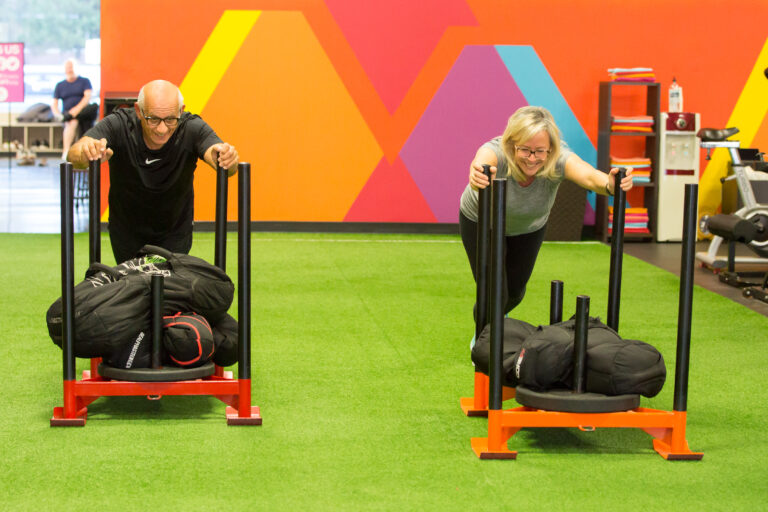
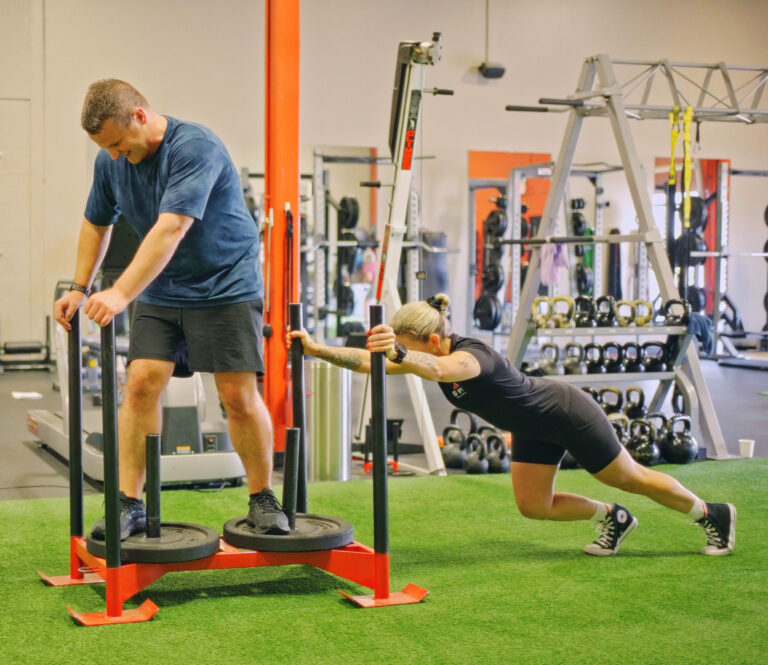
- Loaded carries that require the body to stabilize while moving under resistance
- Resistance machines that allow controlled loading through specific movement patterns
What matters most is not the specific exercise selection but the ability to apply appropriate resistance safely and consistently. The best program is rarely the one with the most advanced movements. It is the one that provides enough challenge to stimulate adaptation while matching an individual’s current fitness level, mobility, and training history.
For adults over 60, that balance becomes especially important. The objective is not to place maximum stress on the body. The objective is to create enough demand for the body to recognize that strong muscles, strong bones, and functional movement capacity are still needed.
Is Resistance Training Safe After 60?
The Most Common Concern: Injury Risk
One of the most common concerns older adults have about strength training is the fear of getting injured. Many people associate resistance training with heavy barbells, intense workouts, or exercises designed for athletes. That image often discourages individuals from exploring strength training, even when it could benefit their health the most.
In reality, effective strength training and heavy lifting are not the same thing.
A Good Program Starts With the Individual
A well-designed program begins with the individual, not the exercise. Current fitness level, mobility, balance, injury history, joint health, medical conditions, and previous training experience all influence how a program is built. The goal is to provide an appropriate challenge, not to push someone into movements or loads they are not ready to handle.
Existing limitations do not automatically prevent someone from strength training. Arthritis, previous injuries, reduced mobility, joint replacements, and chronic discomfort often require exercise modifications rather than exercise avoidance. In many cases, properly selected strength exercises can help improve function, confidence, and day-to-day movement capacity.
What Resistance Training Looks Like at SVPT
- Starting With an Assessment
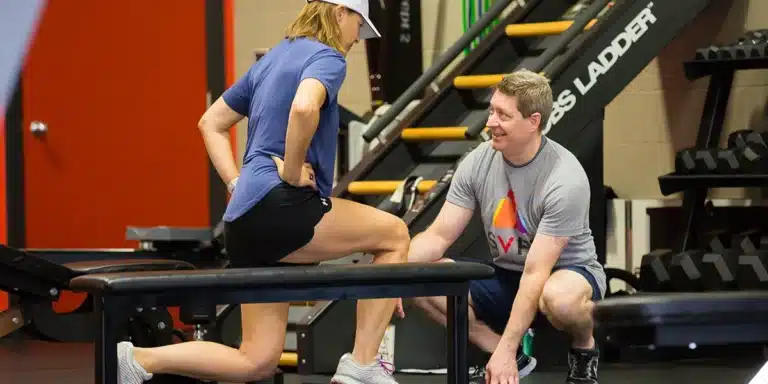
At SVPT, strength training for older adults begins with an assessment rather than a workout. Working with a personal trainer for seniors or a senior fitness personal trainer allows each program to be adapted to an individual’s goals, movement capacity, and training history.
From there, training is built around the individual rather than a standardized program. Two adults of the same age can have very different levels of strength, mobility, balance, and exercise experience. A program designed for someone returning to fitness after twenty years away from the gym may look very different from one designed for a lifelong recreational athlete.
- Building Strength for Everyday Life
Sessions focus on developing practical qualities that support everyday life. Strength remains a primary objective, but it is not the only one. Balance, coordination, mobility, posture, and confidence in movement all play important roles in maintaining independence as people age.
Technique receives significant attention throughout the process. Learning how to move efficiently allows clients to train more effectively and progress gradually over time. As strength improves, resistance and exercise complexity can be adjusted to continue creating meaningful adaptations without unnecessary risk.
- Curious About Strength Training After 60?
If you want to understand how resistance training fits into your health, mobility, and long-term independence goals, schedule a free assessment with an SVPT coach in South Edmonton.
The assessment provides an opportunity to discuss your goals, evaluate your current fitness level, and determine what type of training approach makes the most sense for your situation.